Enlarged prostate (BPH): symptoms, causes and natural options
An enlarged prostate, or benign prostatic hyperplasia (BPH), is a non-cancerous growth of the prostate that becomes common from the fifties. The typical symptoms are a weak or stop-start stream, getting up at night to urinate and a bladder that never feels quite empty. Many men manage it well with daily habits, a check-up and, where needed, prescription options.
Key takeaways
- BPH means the prostate has grown larger; benign means it is not cancer.
- Roughly half of men in their fifties have some enlargement, and most men in their eighties do.
- Weak stream, straining, urgency and night-time trips are the classic symptoms.
- Options range from simple habits and monitoring to prescription tablets and procedures.
- A prostate support supplement is an optional daily routine beside your check-ups.
What is an enlarged prostate (BPH)?
An enlarged prostate is a prostate gland that has grown larger than it was in early adulthood. The medical name is benign prostatic hyperplasia, usually shortened to BPH: benign means it is not cancer, and hyperplasia means the gland has more cells than before.
The prostate sits just below the bladder and wraps around the urethra, the tube that carries urine out. As the inner part of the gland grows, it can press on that tube like a hand gently squeezing a garden hose, which is why the symptoms are almost all about passing urine.
Prostate enlargement is a normal part of ageing for many men. It does not turn into cancer, although both can exist side by side, which is one reason regular check-ups after 45 make sense.
How common is prostate enlargement?
Prostate enlargement is very common. Roughly half of men between 51 and 60 have some degree of BPH, and by the age of 80 most men do, according to large population studies.
Size and symptoms do not always match. Some men with a large prostate barely notice it, while others with modest growth find their sleep and daily plans shaped by the toilet. What matters is how much the symptoms bother you, not the number on a scan.
What are the symptoms of an enlarged prostate?
Enlarged prostate symptoms fall into two groups: problems getting urine out (voiding) and problems holding it in comfortably (storage). Most men notice a mix of both, and the symptoms tend to creep in slowly over months or years.
| Voiding symptoms | Storage symptoms |
|---|---|
| A weak or slow stream | Needing to go again within two hours |
| Waiting before the flow starts | A sudden, strong urge that is hard to delay |
| A stream that stops and starts | Getting up two or more times at night |
| Straining or pushing to finish | Occasional leaking when the urge arrives |
| Dribbling after you have finished | Feeling the bladder has not emptied |
Why does the prostate grow with age?
The prostate grows with age mainly because of hormones. A form of testosterone called DHT keeps prompting prostate cells to multiply throughout adult life, and over decades the inner part of the gland slowly enlarges.
Age and family history are the two biggest factors, and neither can be changed. Others can: a large waist measurement, type 2 diabetes, high blood pressure and an inactive lifestyle are all linked with more bothersome urinary symptoms. That is good news, because the same habits that help your heart and blood sugar also support urinary comfort.
How bad are my symptoms? A simple self-check
A quick self-check shows how much BPH symptoms affect you. GPs often use a seven-question score based on the questions below; for each one, think about the past month and give yourself 0 for never and up to 5 for almost always.
A total of 0 to 7 is usually called mild, 8 to 19 moderate and 20 to 35 severe. Take your score to your appointment: it turns a vague feeling into something your GP can track over time.
- How often have you felt the bladder was not empty after urinating?
- How often have you had to go again less than two hours later?
- How often did the stream stop and start?
- How often was it hard to postpone urinating?
- How often was the stream weak?
- How often did you have to push or strain to begin?
- How many times did you usually get up at night to urinate? (Score the number of times, up to 5.)
When should an enlarged prostate be checked?
Book a GP visit as soon as urinary symptoms start to bother you or wake you at night. Your GP can rule out an infection, check your blood sugar and kidneys, and talk you through the prostate check and PSA blood test described in our general prostate guide.
Some situations cannot wait. If you suddenly cannot pass urine, go to an emergency unit straight away. See your GP promptly if you notice blood in your urine, pain or fever, or if you leak urine without warning.
What are the options for an enlarged prostate?
The options for an enlarged prostate run from simple monitoring to procedures, and the right step depends on how much the symptoms bother you. Many men with mild symptoms choose active monitoring: habits first, with a review every year.
When symptoms are moderate, GPs often suggest prescription tablets. One family relaxes the muscle at the bladder neck and usually helps within days to weeks; another slowly shrinks the gland over several months. Some men use both.
For severe symptoms or complications, a urologist can discuss procedures. The classic option removes the inner part of the gland through the urethra, and newer, less invasive techniques use implants, steam or laser energy. Each has its own recovery time, so ask about the trade-offs.
Which natural habits help with an enlarged prostate?
Natural habits make a real difference to BPH comfort, especially when symptoms are mild. Men who combine several of them often find they sleep better and plan their day less around the bathroom.
- Double voiding: after urinating, wait 30 seconds, relax and try again.
- Spread drinks through the day and taper off in the two hours before bed.
- Ease up on coffee, strong tea, energy drinks and alcohol, especially in the evening.
- Keep your bowels regular with fibre and water; constipation presses on the bladder.
- Walk most days and work towards a healthy waist measurement.
- Try pelvic floor exercises to improve control and reduce dribbling.
- Ask your pharmacist before using cold and flu tablets with decongestants, as some make urinating harder.
Which plant ingredients do men look at for prostate comfort?
Several plant ingredients appear again and again in prostate formulas. Saw palmetto berry, pumpkin seed, nettle root and the bark of the African cherry tree (pygeum) are the best known, and men's vitality formulas often add tongkat ali, tribulus and zinc.
Each has a long history of traditional use, and the amounts differ widely between products. Read the label for the plant names, the extract and the daily serving, and choose one formula rather than stacking several.
Where does a supplement such as Tongkat fit in?
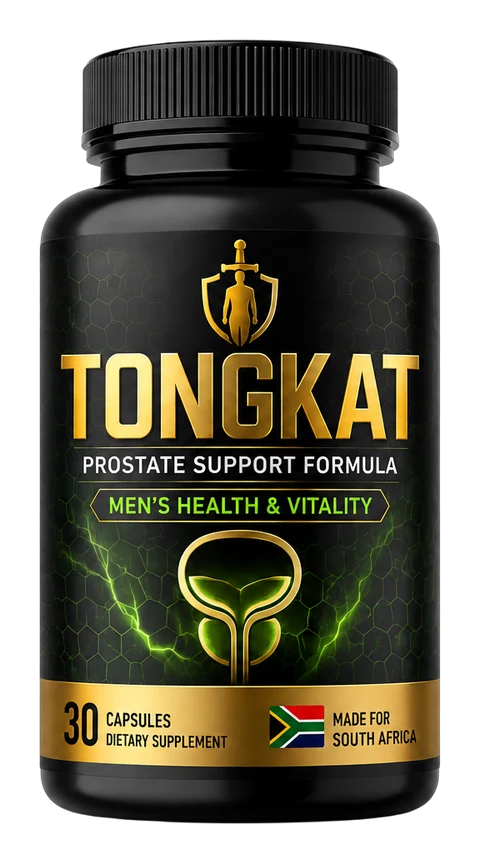
A supplement fits in as an optional daily routine beside your check-ups and habits. Tongkat is a Prostate Support Formula for men aged 45 and over, sold as 30 capsules for a 30-day course.
It combines four named ingredients, Tribulus terrestris extract, tongkat ali, zinc gluconate and vitamin D3, so one bottle covers the routine. The pack costs R649 and you pay the courier on delivery after a short confirmation call.
Mention Tongkat to your GP or pharmacist if you take prescription tablets for the prostate, blood pressure or blood sugar, and before any PSA test.
Frequently asked questions
What is the main symptom of an enlarged prostate?
A weaker, slower urine stream is the symptom men notice most, often together with getting up at night to urinate. Urgency and a feeling of incomplete emptying are also common.
Is BPH the same as prostate cancer?
No. BPH is a non-cancerous growth of the prostate and does not turn into cancer. Because the two can exist side by side, regular check-ups after 45 are still worthwhile.
At what age does the prostate start to enlarge?
The prostate keeps growing slowly through adult life, and symptoms usually appear from the late forties or fifties. Roughly half of men in their fifties have some enlargement.
Can an enlarged prostate shrink naturally?
The gland itself rarely shrinks on its own, but symptoms often improve with habits such as double voiding, timing your drinks and cutting back on caffeine and alcohol. Some prescription tablets reduce the size of the gland over months.
What is the best option for an enlarged prostate?
It depends on how much the symptoms bother you. Mild symptoms are often managed with habits and yearly reviews; moderate symptoms with prescription tablets; severe symptoms with a procedure discussed with a urologist.
Which foods are good for an enlarged prostate?
A diet rich in vegetables, tomatoes, beans, fish, nuts and seeds such as pumpkin seeds supports general and prostate health. Keeping a healthy weight matters as much as any single food.
Does drinking less water help an enlarged prostate?
Drinking too little makes urine concentrated and can irritate the bladder. Drink steadily during the day and taper off in the two hours before bed instead.
Can I take Tongkat if I have an enlarged prostate?
Tongkat is made for men 45 and over as a daily routine for prostate comfort. Show the pack to your GP or pharmacist first, especially if you already take prostate tablets.